
By Mark Neff, CEO, Forsyth Humane Society In March, our lives flipped upside down when my partner was diagnosed with Stage 4 metastatic melanoma. The news was gut-wrenching, and our normal routine vanished overnight. It became a relentless whirlwind of five surgeries, biweekly oncologist visits, monthly infusions, and the constant management of fatigue and uncertainty. Life wasn’t about to-do lists anymore; it was about survival. As the CEO of Forsyth Humane Society, I’ve always been a Type A person who thrives on being the go-to person. I often tell people our work is like running an emergency room—it’s fast-paced, and community needs are always shifting. But this experience has forced me to let go of the relentless pursuit of perfection. I’ve had to accept that not every email will be answered by the end of the day and that it’s okay for to-do lists to roll over. Most importantly, I’ve learned that asking for help isn’t a weakness; it’s a sign of true strength. I’m incredibly lucky to have an amazing team. They don’t wait for me to “fix” everything. Instead, they rise to the occasion, solving problems and carrying our mission forward with professionalism and kindness. Watching them shine has been a powerful lesson: true leadership isn’t about doing it all yourself. It’s about empowering others and trusting them to get the job done. This lesson extends to my home life, where I’ve had to embrace a new kind of imperfection. It’s okay if the house isn’t pristine every day or if the dogs miss a walk one evening. For years, I’ve urged my team to take vacations and find balance. Yet, I was the first to put in 50–60-hour weeks without a break in over two years. This journey has forced me to practice what I preach. Balance isn’t a luxury; it’s essential for a sustainable life. It’s so easy to talk about balance and cherishing what truly matters. We hear it everywhere, from social media to self-help gurus. But living it? That’s a whole different ball game. I now encourage all of us to not just acknowledge these truths but to act on them. You can be a solid leader and run a successful business while also being a present partner, parent, or friend. The key is to take care of yourself and the people who mean the most to you. I’ve always believed in the principle of “no judgment.” In animal welfare, it’s easy to make snap assumptions about people, but we never know the hidden struggles they might be facing. I’ve told my team this time and again, and now I’m living it from the other side. My struggles aren’t always visible, and I’ve realized that what others think of me matters far less than simply doing my best and understanding my own motivations. This journey is ongoing and certainly not easy. But I’m learning that true strength isn’t about doing more; it’s about finding balance, leaning on others, and giving ourselves the same grace we give to those around us. It’s a lesson I’ll carry with me as a leader and, more importantly, as a human being.
Before You Hit “Send”: A Reflection on Kindness, Accountability, and Responsibility
By Mark Neff, CEO, Forsyth Humane Society In an age where communication is instantaneous and emotions can be broadcast with the tap of a key, it’s more important than ever to pause and ask ourselves: “Do I have all the facts?” As the CEO of Forsyth Humane Society, I am deeply proud of the work we do every day to advocate for animals and support the people who love and care for them. But in our increasingly digital world, I’ve also observed a growing tendency—within our communities and beyond—to rush to judgment and unleash criticism without taking time to understand the full picture. This isn’t just a matter of social decorum; it’s about integrity, empathy, and the values we choose to uphold as individuals and as a society. Too often, someone’s reputation—be it an individual, a business, or an organization—is damaged by the power of a social media post or email that’s rooted in frustration or hearsay rather than truth. What’s often missing from these moments is due diligence—the simple act of ensuring that we’ve gathered all sides of a story before reacting. We must remember that every narrative has more than one perspective, and often, what we see or hear initially is incomplete at best. And this isn’t just about fairness. It’s about humanity. We rarely know the full story of what someone else may be carrying. The coworker who seems withdrawn may be struggling with personal loss. The business you feel didn’t meet your expectations may be working through staff shortages or internal crises. The individual you’re tempted to criticize online may be giving everything they have to hold it all together. By rushing to judgment and reacting publicly, we may unintentionally inflict harm on people who are already in pain. That’s why I believe so strongly in the power—and the necessity—of kindness. It may sound simple, but in a time when kindness feels in such short supply, choosing it is an act of courage. Choosing to listen instead of assume. Choosing to ask instead of accuse. Choosing to respond instead of react. These are the choices that define our character, and they can be the difference between division and understanding. This does not mean we avoid accountability or excuse poor behavior. Feedback, when grounded in fact and shared constructively, is vital for growth. But we have alternatives in how we engage with one another, especially when emotions are high. When we’re disgruntled or disappointed, let’s start by seeking direct and respectful dialogue. Let’s use the channels available to us to express concerns privately and with care. Let’s remember that people are human—and most are trying their best. As a community, we are stronger when we choose empathy over outrage, truth over assumption, and kindness over condemnation. The work we do at Forsyth Humane Society is built on compassion—for animals and for people. That compassion doesn’t end at the shelter door. It extends to how we treat one another, how we show up in times of tension, and how we choose to communicate in a digital world that often forgets the human on the other side of the screen. So before you hit “send,” I invite you to pause. Ask yourself if you’ve sought the full story. Consider the weight of your words and the lives they touch. And whenever possible, choose the path of grace. It may not be the loudest choice, but it’s often the one that brings us closer to the kind of community—and the kind of world—we all want to be part of. With respect and gratitude,Mark NeffCEO, Forsyth Humane Society
Navigating the Waves of Communication in Animal Welfare: A Perspective from the Helm of Forsyth Humane Society
Written By: Mark Neff, President & CEO of Forsyth Humane Society In the bustling, heartwarming, yet often heart-wrenching world of animal welfare, communication is both a beacon of hope and a challenge to surmount. As President and CEO of Forsyth Humane Society, I’ve navigated the diverse currents of communication that flow between our staff, volunteers, foster network, board of directors, finance and marketing teams, and executive committees, as well as the public. Each group brings its own dialect of passion, concern, and vision to the collective table, making effective communication a necessity and a lifeline to our mission’s success. The Emotional Landscape The first hurdle in our communication journey is the deeply emotional nature of our work. Animals, by their very essence, evoke strong emotions from people. The stories of rescue, rehabilitation, and sometimes loss we share can profoundly affect our team members and the public. Communicating in such a charged atmosphere requires a delicate balance: we must be empathetic, supportive, clear, and decisive. It’s a dance of conveying hard truths with compassion, celebrating victories without complacency, and always advocating for our non-human friends’ welfare. Diverse Communication Styles Our organization is a tapestry of individuals, each with their own communication style. Staff may prefer direct, concise updates, while volunteers resonate more with stories and emotional connections. On the other hand, the board of directors and executive committees often seek detailed reports and strategic plans. Bridging these styles requires a multifaceted approach, utilizing a mix of formal presentations, heartfelt storytelling, and open forums for dialogue. The key is knowing your audience and tailoring your message to ensure it reaches and resonates with them. Public Perceptions and Challenges Engaging with the public presents its own set of challenges. The passionate nature of animal welfare means that public opinions are solid and varied. Misunderstandings can quickly escalate, and well-intentioned actions can sometimes be misconstrued. To navigate this, we prioritize transparency and education in our communications. Social media, press releases, and public events become tools not just for sharing our successes but for opening lines of communication, educating the public about the complexities of animal welfare, and inviting dialogue rather than dissent. Inter-Organizational Dynamics Another dimension of our communication landscape involves interactions with other animal welfare organizations. Unfortunately, not all dialogues are supportive or constructive. Criticism and negative commentary can emerge, driven by differing philosophies or resource competition. To overcome these challenges, we focus on collaboration over confrontation. We seek common ground and mutual respect by emphasizing shared goals and the overarching mission of animal welfare. When faced with negativity, we respond with professionalism and a steadfast commitment to our principles, often turning potential conflicts into opportunities for partnership and growth. The Path Forward As we continue to evolve and grow, effective communication becomes increasingly critical. It’s about more than just sharing information; it’s about building relationships, fostering understanding, and creating a community united in its commitment to animal welfare. By embracing the complexities of our communication challenges, we strengthen not just our organization but the very fabric of the animal welfare community. At Forsyth Humane Society, we are committed to refining our communication strategies, always with an eye toward empathy, clarity, and unity. In doing so, we enhance our ability to care for animals in need and inspire others to join us in this vital, compassionate work. Together, through the power of effective communication, we can navigate any challenge and turn our shared vision for animal welfare into a reality.
Celebrating Black History Month
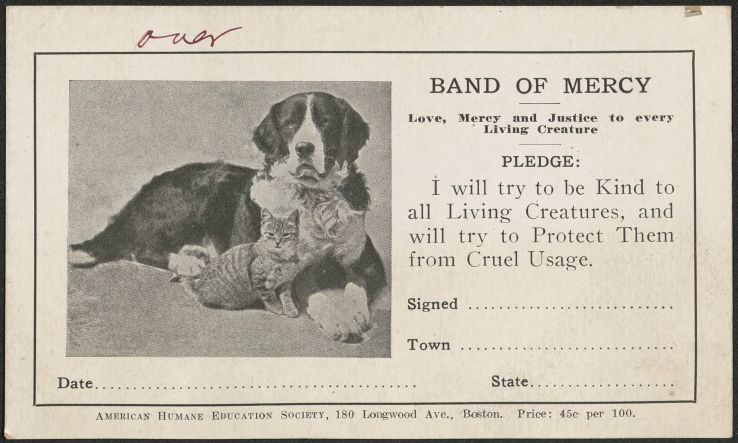
Forsyth Humane Society is celebrating Black History Month by spotlighting Black men and women who have made great contributions to the animal welfare world. The Humane Society of the United States reminds us that, “the history is complex: The modern American animal welfare movement emerged in the wake of emancipation, and from the beginning, the movement’s leaders drew comparisons between human slavery and animal abuse. (Paula) Tarankow’s research shows that using the experience of Black Americans as a metaphor for animal causes ignored the fact that Black Americans were still suffering the very real effects of slavery. In working with white animal advocates, Black animal advocates were typically discouraged from raising the subject of the racism they continued to experience in their daily lives, essentially forcing them to choose: If they wanted to raise their voices for animals, they would have to keep silent about racism to avoid making the largely white, middle-class “mainstream” of the early movement uncomfortable.” The Humane Society of the United States continues explaining how among the messiness of the movement, “Black reformers continued to advocate for animals even as they themselves continued to be denied their full humanity. Rather than use liberation from slavery as a metaphor for animal rights, Black reformers saw kindness toward animals as an extension of civil rights activism, emphasizing that kindness toward animals and kindness toward human beings were linked. One of the most prolific platforms for this work involved the Bands of Mercy program, of the Massachusetts SPCA. Bands of Mercy were humane education groups, and members participated in meetings and community service that centered around being kind to animals. Many participants were children who took lifelong pledges to be kind to animals and to try to prevent harm to all living creatures. Black advocates in several Southern states were highly involved with the program as teachers and organizers and worked as field agents.” F. Rivers Barnwell of Texas approached kindness to animals as a social justice project promoting competitions at African American schools to build birdhouses to support wildlife, and spoke to soldiers about the humane treatment of horses used in World War I. The Rev. Richard Carroll, a prominent South Carolina reformer, born into slavery, also established Bands of Mercy as he worked to create a more humane world in his work from around 1910 until he died in 1929. His son, Seymour Carroll, built on this legacy, campaigning against the use of steel traps for wildlife in South Carolina. Perhaps the most famous Black leader in the early animal welfare movement was a formerly enslaved man named William Key. Mr. Key performed for hundreds of thousands of people along with his horse, “Beautiful Jim Key”. The horse responded to prompts and requests from the audience, showing his intelligence. Key and his horse modeled a beautiful example of the human-animal relationship not sustained through violence. A core part of their act emphasized that Beautiful Jim never felt the sting of a whip—instead, he’d been trained through patience, kindness, apples, and sugar! By the end of Key’s career in 1909, more than a million children had taken the Jim Key Pledge to be kind to animals. As the movement progresses, we see a more diverse population of Doctor of Veterinary Medicine. Dr. Iverson C. Bell (1916-1984) started his education at Kansas State University, served in the US Army, returned to Wayne State University, and on to Michigan State University where he earned his DVM. He ran a thriving private practice for 35 years, valuing education and political leadership positions including those for fair housing, and criminal justice. He was honored with an ambassadorship to Nigeria by President John F. Kennedy and worked throughout his life to combat discrimination of his era. Alongside Dr. Bell, was Dr. Frederick Douglass Patterson (1901-1988) the founder of the Tuskegee School of Veterinarian Medicine which, to this day, has graduated an estimated 75% of African American veterinarians. Named after the famed journalist and anti-slavery leader, Dr. Patterson was raised by his older sister after being orphaned at the age of two. He attended Iowa State College where he earned his DVM and began teaching at Tuskegee University in 1928. Among his many accomplishments was the founding of the United Negro College Fund which remains a major financial supporter of Historically Black Colleges and Universities. Just after Dr. Patterson began teaching at Tuskegee University, and while Dr. Bell was progressing in the movement towards equality in veterinarian medicine, Dr. Alfreda Johnson Webb was growing up in Alabama. She completed her Bachelor of Science and attended the Tuskegee University School of Veterinarian Medicine. In 1949 she graduated alongside Dr. Jane Hinton as the first African American woman to graduate from veterinarian school. Dr. Patterson was also the first licensed woman to practice veterinarian medicine in the United States. She was a biology professor at North Carolina Agricultural and Technical State University from 1959 to 1978, where she was a member of the planning committee that founded the School of Veterinarian Medicine of North Carolina State University. She held many honors and served on many committees and is a true pioneer in our field and a champion of justice and democracy. At Forsyth Humane Society we are committed to creating conditions within our community that foster the compassionate care of pets and the people who love them. We strive to continue to learn more about and work alongside the people of color who have and continue to positively impact the animal welfare community right here in our backyard to pave a path together, towards a humane society. Here’s to taking, and continuing, the tradition of the Jim Key Pledge of being kind to animals, and people! Sources: The Humane Society of the United States, Faithful Friends Animal Society, Michigan Humane Society, and VCA Animal Hospitals
Embracing Change and Growth in the New Year at Forsyth Humane Society

Written By: Mark Neff, President & CEO of Forsyth Humane Society As we step into another promising year at the Forsyth Humane Society, I find myself reflecting on our journey and looking forward with renewed enthusiasm. This year is particularly momentous for us as we eagerly anticipate the opening of our new spay-neuter clinic, a significant stride towards our mission. Our new clinic is not just a facility; it represents our commitment to proactive solutions in animal care. By offering affordable spay and neuter services, we aim to address pet overpopulation at its root, reducing the number of animals that end up in shelters. This initiative aligns perfectly with our overarching goal: to keep animals in loving homes and out of the shelter system. In the past year, we’ve made remarkable progress in growing our services to support the community. Our focus has been on providing resources that assist pet owners in keeping their animals at home. From educational programs to food assistance and behavioral support, our team works tirelessly to ensure that pets and their families stay together. In our mission to support the community, we recognize the importance of creating a safe and welcoming environment for everyone. This year, a key focus will be to foster a space where community members feel comfortable seeking assistance for their pets, free from judgment or shame. We understand that asking for help can be difficult, which is why we are committed to offering compassionate and empathetic support. Whether it’s guidance on pet care, assistance with supplies, or educational resources, our team is here to help in a respectful and understanding manner. By promoting an atmosphere of inclusivity and non-judgment, we aim to strengthen the bond between pets and their families, ensuring that everyone has access to the resources they need to thrive together. Looking ahead, we are setting ambitious goals to increase our adoption rates and intake capacity. Every animal that comes through our doors deserves a chance at a loving home, and we are dedicated to making that a reality for as many pets as possible. Our efforts in this direction are not just about numbers; they’re about making a tangible difference in the lives of animals and the people who care for them. Collaboration and partnership remain at the heart of our strategy. This year, we seek to forge new alliances and strengthen existing ones with local organizations, businesses, and animal welfare advocates. These partnerships are invaluable, allowing us to extend our reach and impact. Most importantly, as we grow and evolve, we remain committed to the wellbeing of our staff and volunteers – the backbone of Forsyth Humane Society. Their dedication and compassion are what drive our success. We continue to invest in their development and ensure they have the support needed to do their best work. In conclusion, the new year brings new opportunities and challenges, but our mission remains steadfast: to care for animals and the people who love them. Together, with your support, we will make a significant impact in our community, one pet at a time. Thank you for being part of this journey.