By Mark Neff, CEO, Forsyth Humane Society In March, our lives flipped upside down when my partner was diagnosed with Stage 4 metastatic melanoma. The news was gut-wrenching, and our normal routine vanished overnight. It became a relentless whirlwind of five surgeries, biweekly oncologist visits, monthly infusions, and the constant management of fatigue and uncertainty. Life wasn’t about to-do lists anymore; it was about survival. As the CEO of Forsyth Humane Society, I’ve always been a Type A person who thrives on being the go-to person. I often tell people our work is like running an emergency room—it’s fast-paced, and community needs are always shifting. But this experience has forced me to let go of the relentless pursuit of perfection. I’ve had to accept that not every email will be answered by the end of the day and that it’s okay for to-do lists to roll over. Most importantly, I’ve learned that asking for help isn’t a weakness; it’s a sign of true strength. I’m incredibly lucky to have an amazing team. They don’t wait for me to “fix” everything. Instead, they rise to the occasion, solving problems and carrying our mission forward with professionalism and kindness. Watching them shine has been a powerful lesson: true leadership isn’t about doing it all yourself. It’s about empowering others and trusting them to get the job done. This lesson extends to my home life, where I’ve had to embrace a new kind of imperfection. It’s okay if the house isn’t pristine every day or if the dogs miss a walk one evening. For years, I’ve urged my team to take vacations and find balance. Yet, I was the first to put in 50–60-hour weeks without a break in over two years. This journey has forced me to practice what I preach. Balance isn’t a luxury; it’s essential for a sustainable life. It’s so easy to talk about balance and cherishing what truly matters. We hear it everywhere, from social media to self-help gurus. But living it? That’s a whole different ball game. I now encourage all of us to not just acknowledge these truths but to act on them. You can be a solid leader and run a successful business while also being a present partner, parent, or friend. The key is to take care of yourself and the people who mean the most to you. I’ve always believed in the principle of “no judgment.” In animal welfare, it’s easy to make snap assumptions about people, but we never know the hidden struggles they might be facing. I’ve told my team this time and again, and now I’m living it from the other side. My struggles aren’t always visible, and I’ve realized that what others think of me matters far less than simply doing my best and understanding my own motivations. This journey is ongoing and certainly not easy. But I’m learning that true strength isn’t about doing more; it’s about finding balance, leaning on others, and giving ourselves the same grace we give to those around us. It’s a lesson I’ll carry with me as a leader and, more importantly, as a human being.
Celebrating Black History Month
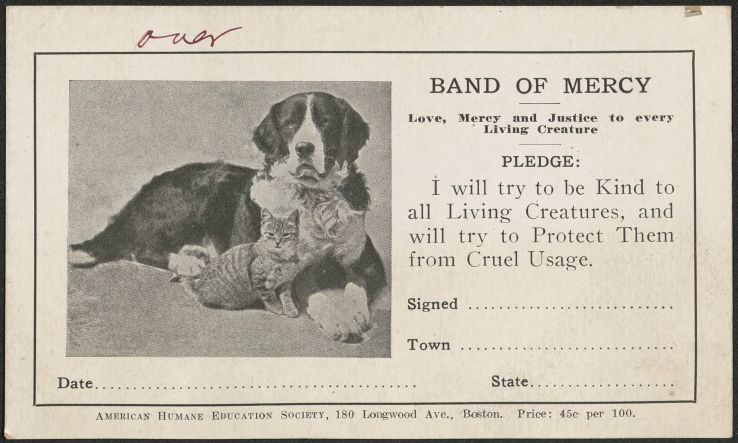
Forsyth Humane Society is celebrating Black History Month by spotlighting Black men and women who have made great contributions to the animal welfare world. The Humane Society of the United States reminds us that, “the history is complex: The modern American animal welfare movement emerged in the wake of emancipation, and from the beginning, the movement’s leaders drew comparisons between human slavery and animal abuse. (Paula) Tarankow’s research shows that using the experience of Black Americans as a metaphor for animal causes ignored the fact that Black Americans were still suffering the very real effects of slavery. In working with white animal advocates, Black animal advocates were typically discouraged from raising the subject of the racism they continued to experience in their daily lives, essentially forcing them to choose: If they wanted to raise their voices for animals, they would have to keep silent about racism to avoid making the largely white, middle-class “mainstream” of the early movement uncomfortable.” The Humane Society of the United States continues explaining how among the messiness of the movement, “Black reformers continued to advocate for animals even as they themselves continued to be denied their full humanity. Rather than use liberation from slavery as a metaphor for animal rights, Black reformers saw kindness toward animals as an extension of civil rights activism, emphasizing that kindness toward animals and kindness toward human beings were linked. One of the most prolific platforms for this work involved the Bands of Mercy program, of the Massachusetts SPCA. Bands of Mercy were humane education groups, and members participated in meetings and community service that centered around being kind to animals. Many participants were children who took lifelong pledges to be kind to animals and to try to prevent harm to all living creatures. Black advocates in several Southern states were highly involved with the program as teachers and organizers and worked as field agents.” F. Rivers Barnwell of Texas approached kindness to animals as a social justice project promoting competitions at African American schools to build birdhouses to support wildlife, and spoke to soldiers about the humane treatment of horses used in World War I. The Rev. Richard Carroll, a prominent South Carolina reformer, born into slavery, also established Bands of Mercy as he worked to create a more humane world in his work from around 1910 until he died in 1929. His son, Seymour Carroll, built on this legacy, campaigning against the use of steel traps for wildlife in South Carolina. Perhaps the most famous Black leader in the early animal welfare movement was a formerly enslaved man named William Key. Mr. Key performed for hundreds of thousands of people along with his horse, “Beautiful Jim Key”. The horse responded to prompts and requests from the audience, showing his intelligence. Key and his horse modeled a beautiful example of the human-animal relationship not sustained through violence. A core part of their act emphasized that Beautiful Jim never felt the sting of a whip—instead, he’d been trained through patience, kindness, apples, and sugar! By the end of Key’s career in 1909, more than a million children had taken the Jim Key Pledge to be kind to animals. As the movement progresses, we see a more diverse population of Doctor of Veterinary Medicine. Dr. Iverson C. Bell (1916-1984) started his education at Kansas State University, served in the US Army, returned to Wayne State University, and on to Michigan State University where he earned his DVM. He ran a thriving private practice for 35 years, valuing education and political leadership positions including those for fair housing, and criminal justice. He was honored with an ambassadorship to Nigeria by President John F. Kennedy and worked throughout his life to combat discrimination of his era. Alongside Dr. Bell, was Dr. Frederick Douglass Patterson (1901-1988) the founder of the Tuskegee School of Veterinarian Medicine which, to this day, has graduated an estimated 75% of African American veterinarians. Named after the famed journalist and anti-slavery leader, Dr. Patterson was raised by his older sister after being orphaned at the age of two. He attended Iowa State College where he earned his DVM and began teaching at Tuskegee University in 1928. Among his many accomplishments was the founding of the United Negro College Fund which remains a major financial supporter of Historically Black Colleges and Universities. Just after Dr. Patterson began teaching at Tuskegee University, and while Dr. Bell was progressing in the movement towards equality in veterinarian medicine, Dr. Alfreda Johnson Webb was growing up in Alabama. She completed her Bachelor of Science and attended the Tuskegee University School of Veterinarian Medicine. In 1949 she graduated alongside Dr. Jane Hinton as the first African American woman to graduate from veterinarian school. Dr. Patterson was also the first licensed woman to practice veterinarian medicine in the United States. She was a biology professor at North Carolina Agricultural and Technical State University from 1959 to 1978, where she was a member of the planning committee that founded the School of Veterinarian Medicine of North Carolina State University. She held many honors and served on many committees and is a true pioneer in our field and a champion of justice and democracy. At Forsyth Humane Society we are committed to creating conditions within our community that foster the compassionate care of pets and the people who love them. We strive to continue to learn more about and work alongside the people of color who have and continue to positively impact the animal welfare community right here in our backyard to pave a path together, towards a humane society. Here’s to taking, and continuing, the tradition of the Jim Key Pledge of being kind to animals, and people! Sources: The Humane Society of the United States, Faithful Friends Animal Society, Michigan Humane Society, and VCA Animal Hospitals
📢 Breaking News: Forsyth Humane Society’s Next Endeavor – A New Low-Cost Spay/Neuter & Wellness Clinic at 725 Waughtown Street! 🏥🐾
Dear friends and supporters, We are thrilled to share some incredible news that’s bound to make a paw-sitive impact on our community! Forsyth Humane Society is proud to announce the acquisition of the 725 Waughtown Street location, where we’ll soon be opening a state-of-the-art Low-Cost Spay/Neuter & Wellness Clinic! Our mission has always been to improve the lives of pets and the people who love them. With this new venture, we’re taking a giant leap forward in fulfilling our mission by removing barriers to vital wellness services and surgeries for our beloved furry companions. Here’s what this exciting development means for our community: Affordable Services: We understand that providing quality healthcare for your pets can be financially challenging. Our low-cost clinic will offer a range of essential services, including spaying and neutering, vaccinations, microchipping, and more. Accessible Care: Our new clinic’s central location on Waughtown Street ensures easy access for all members of the community. No more long commutes or difficult journeys – we’re bringing convenient and reliable pet care closer to you. Community Impact: By providing affordable spay/neuter and wellness services, we’re not only promoting responsible pet ownership but also contributing to the overall health and well-being of our furry family members. Healthier pets mean happier families and a stronger, more vibrant community. Reducing Overpopulation: One of our core goals is to address the issue of pet overpopulation. By making spay/neuter services more accessible, we’re taking a proactive step towards reducing the number of homeless animals and ensuring that every pet has the chance for a loving, forever home. Empowering Pet Owners: We believe that every pet owner should have the resources and knowledge to provide the best care for their pets. Our clinic will not only offer services but also information on resources to empower you to be the best pet parent you can be. Stay tuned for more updates as we work diligently to transform this space into a hub of compassionate care. We are incredibly grateful for your continued support, which has made this expansion possible. Thank you for being a part of this journey with us! Together, we’re making a difference in the lives of animals and the community we hold dear. With heartfelt gratitude, Mark Neff President & CEO Forsyth Humane Society
Carman’s Journey to a Happy Ending: Help Fund Her Surgery!

Carman, a sweet black Labrador, came into our care at Forsyth Humane Society as an owner surrender. Due to unforeseen circumstances, her previous owner could not provide the time and care she deserved, and she arrived at the shelter alongside her companion, Guy. Although they lived together for a few years, it became apparent that they were not a bonded pair, and Guy found his forever home quickly. However, Carman’s journey took a different turn when we noticed she was limping, leading to a crucial discovery that changed her life. As dedicated caretakers of the animals in our care, we immediately noticed Carman’s discomfort and took her to our medical team for a thorough examination. Our veterinary experts soon diagnosed her with a torn cruciate ligament in her right knee, requiring urgent attention and specialized treatment. To ensure Carman’s well-being and give her the chance of a pain-free future, the vet recommended surgery to repair her torn CCL. Unfortunately, the surgery must be performed by a specialty veterinarian, making it essential and costly. It would cost up to 4,000. Carman’s condition is not to be taken lightly. If left untreated, it could cause her considerable pain and discomfort and increase the risk of injuring her opposite leg. We cannot allow this precious girl to suffer, so we’re contacting our wonderful community for support. While we work towards raising funds for Carman’s surgery, we are fortunate to have placed her in a loving foster home. Her foster family provides her with the care, love, and attention she deserves, making her feel safe and cherished as she waits for the surgery to change her life. Carman’s journey toward a happy ending depends on the generosity of our community. We humbly request your support in funding her much-needed surgery. Your contribution, no matter how big or small, will make a tremendous difference in her life and help her regain her mobility and comfort. Let’s come together and ensure that Carman gets the chance to experience a life full of love and joy. Following the surgery, Carman’s journey to recovery will continue with physical therapy, including hydrotherapy, which will aid in her healing process. We are committed to providing her with the best possible care and ensuring she receives the attention she needs throughout her rehabilitation. With your help, Carman can have the happy ending she so deserves. Let’s join forces, spread the word, and rally our community to support this fantastic girl on her path to recovery and a brighter future. Together, we can positively impact Carman’s life and demonstrate the true power of compassion and kindness. Carman’s story reminds us of the importance of responsible pet ownership and the need to provide our furry friends with the love and care they deserve. We are deeply committed to Carman’s well-being, and we know that with your support, she will overcome this obstacle and find her forever home. Let’s make a difference in Carman’s life and show her that her happy ending is just around the corner. Thank you for being a part of this incredible journey!
Forsyth Humane Society’s Scientific Approach to Mental Health
Written By: Mark Neff, President & CEO of Forsyth Humane Society At Forsyth Humane Society, we believe in the power of the human-animal bond and its importance in promoting mental health and well-being. May is Mental Health Awareness Month, and we are reminded of the significance of mental health and the resources available to support those facing mental health challenges. This year’s theme for Mental Health Awareness Month, “Tools 2 Thrive,” emphasizes practical tools that help improve mental health and well-being. One tool in the mental health support toolkit is the human-animal bond, highlighting the mutually beneficial relationship between people and animals. Research has shown that interacting with animals can positively improve mental health by reducing symptoms of depression, anxiety, and PTSD. The release of oxytocin, a hormone associated with social bonding and stress reduction, is one of the primary ways animals benefit mental health. This hormone is released when humans interact with animals, leading to feelings of calm and relaxation. In addition to releasing oxytocin, interacting with animals can improve social skills and provide a sense of purpose. For individuals who struggle with social anxiety or feel isolated, having a pet or participating in animal-assisted therapy can provide opportunities for social interaction and help to build meaningful relationships. Caring for an animal can also give us a sense of purpose and help us get out of bed in the morning. If you are looking for a furry companion, you can view our adoptable animals at https://forsythhumane.org/adopt/how-to-adopt/ Animal-assisted therapy is a growing field that involves partnering with animals to treat mental health disorders. This therapy can include working with trained therapy animals, such as dogs or horses, in a clinical setting to help individuals work through challenges related to mental health. Equine therapy, in particular, effectively treats PTSD and other mental health disorders. Locally, Elite Canine Comfort Dogs visits organizations and assisted living communities for animal-assisted therapy. Volunteering with animals is another way to cultivate the human-animal bond and improve mental health. Many organizations, including Forsyth Humane Society, rely on volunteers to help care for animals. Volunteering can provide a sense of purpose and accomplishment, as well as opportunities for social interaction and connection with others who share a love of animals. You can learn more about volunteering with Forsyth Humane Society at https://forsythhumane.org/volunteer/ Coming soon, members of our community can take a dog from the shelter for a Dog Day Out field trip as another way to volunteer your time and receive a mental health boost. Forsyth Humane Society is an animal welfare organization that celebrates the wellness of companionship. We are committed to promoting the human-animal bond and its role in supporting mental health. Whether through pet ownership, animal-assisted therapy, or volunteering with animals, interacting with animals has been shown to have numerous benefits. Companionship reduces symptoms of anxiety and depression, improves social skills, and provides a sense of purpose. We also want to destigmatize conversations around mental health and promote resources available to those suffering in silence. A cat scratching at your bedroom door, asking you to get up to play during a depressive episode, or walking a dog through a beautiful park is a small dose of medicine that benefits everyone. As we continue to observe Mental Health Awareness Month, let us remember the importance of the human-animal bond and the resources available to support mental health and well-being. If you or someone you know is struggling with thoughts of self-harm or suicide, it’s important to seek immediate help. Here are some directions to contact a suicide hotline: Call the National Suicide Prevention Lifeline: Dial 988. This hotline is available 24/7 and offers free, confidential support to individuals in crisis. Or visit: https://988lifeline.org/ Please note that while these resources can provide immediate help, they are not a substitute for professional medical or mental health advice. If you or someone you know is in immediate danger or experiencing a medical emergency, please call your local emergency services or go to the nearest emergency room. Remember, reaching out for support is a brave and important step toward healing. You are not alone, and there are people who care and want to help you through this difficult time.
- 1
- 2
- 3
- …
- 9
- Next Page »