
Written By: Mark Neff, President & CEO of Forsyth Humane Society In the bustling, heartwarming, yet often heart-wrenching world of animal welfare, communication is both a beacon of hope and a challenge to surmount. As President and CEO of Forsyth Humane Society, I’ve navigated the diverse currents of communication that flow between our staff, volunteers, foster network, board of directors, finance and marketing teams, and executive committees, as well as the public. Each group brings its own dialect of passion, concern, and vision to the collective table, making effective communication a necessity and a lifeline to our mission’s success. The Emotional Landscape The first hurdle in our communication journey is the deeply emotional nature of our work. Animals, by their very essence, evoke strong emotions from people. The stories of rescue, rehabilitation, and sometimes loss we share can profoundly affect our team members and the public. Communicating in such a charged atmosphere requires a delicate balance: we must be empathetic, supportive, clear, and decisive. It’s a dance of conveying hard truths with compassion, celebrating victories without complacency, and always advocating for our non-human friends’ welfare. Diverse Communication Styles Our organization is a tapestry of individuals, each with their own communication style. Staff may prefer direct, concise updates, while volunteers resonate more with stories and emotional connections. On the other hand, the board of directors and executive committees often seek detailed reports and strategic plans. Bridging these styles requires a multifaceted approach, utilizing a mix of formal presentations, heartfelt storytelling, and open forums for dialogue. The key is knowing your audience and tailoring your message to ensure it reaches and resonates with them. Public Perceptions and Challenges Engaging with the public presents its own set of challenges. The passionate nature of animal welfare means that public opinions are solid and varied. Misunderstandings can quickly escalate, and well-intentioned actions can sometimes be misconstrued. To navigate this, we prioritize transparency and education in our communications. Social media, press releases, and public events become tools not just for sharing our successes but for opening lines of communication, educating the public about the complexities of animal welfare, and inviting dialogue rather than dissent. Inter-Organizational Dynamics Another dimension of our communication landscape involves interactions with other animal welfare organizations. Unfortunately, not all dialogues are supportive or constructive. Criticism and negative commentary can emerge, driven by differing philosophies or resource competition. To overcome these challenges, we focus on collaboration over confrontation. We seek common ground and mutual respect by emphasizing shared goals and the overarching mission of animal welfare. When faced with negativity, we respond with professionalism and a steadfast commitment to our principles, often turning potential conflicts into opportunities for partnership and growth. The Path Forward As we continue to evolve and grow, effective communication becomes increasingly critical. It’s about more than just sharing information; it’s about building relationships, fostering understanding, and creating a community united in its commitment to animal welfare. By embracing the complexities of our communication challenges, we strengthen not just our organization but the very fabric of the animal welfare community. At Forsyth Humane Society, we are committed to refining our communication strategies, always with an eye toward empathy, clarity, and unity. In doing so, we enhance our ability to care for animals in need and inspire others to join us in this vital, compassionate work. Together, through the power of effective communication, we can navigate any challenge and turn our shared vision for animal welfare into a reality.
Navigating the Tides of Change: The Challenges of Animal Welfare in Post-Pandemic Times
Written By: Mark Neff, President & CEO of Forsyth Humane Society As we move through the post-pandemic era, animal welfare agencies face unprecedented challenges in our mission to protect and care for animals. Today, I want to share some of these challenges, the impact on teams, and the importance of support in these trying times. Unprecedented Increase in Animal Intakes, Decreased Adoptions We are witnessing an alarming increase in animal intakes and a decrease in adoption rates, creating a scenario that strains resources and impacts the quality of care that agencies can provide. This shift is mainly due to economic changes, access to pet-friendly housing, and affordable veterinary care that have emerged since the pandemic. The Emotional Toll: Addressing Mental Health Concerns The emotional burden borne by staff is a significant concern. Daily, they face situations that can lead to heightened levels of stress, leading to higher incidents of depression and other mental health issues. This reality highlights the need for robust support systems and mental health resources to support our team’s well-being. Rethinking the “Do More, Be Better” Mantra The standard narrative urging animal shelters to “do more” and “be better” needs reconsideration. While the intention is to encourage better care for animals, this mantra can inadvertently lead to adverse outcomes. Overcrowding in shelters, a direct result of trying to do more, not only stresses resources but also negatively impacts the animals themselves. It can lead to increased stress and health issues among the animals, which is counterproductive to the mission of providing them with the best possible care. Overpopulation and Its Impacts Managing overpopulation in shelters is a complex issue. Simply taking in more animals without considering the capacity for quality care can lead to diminished animal welfare and increased stress on our staff. A more sustainable approach is needed, one that balances animal intake with the ability to provide high-quality care. Addressing Staffing Shortages Another critical issue faced is staffing shortages. The pandemic has exacerbated this problem, making it more challenging to maintain a team capable of providing the level of care needed. This shortage not only puts additional pressure on existing staff but also affects our shelter’s overall operation and effectiveness. The Need for Community and National Support Now, more than ever, we rely on the support of community and national organizations. Whether through donations, grants, volunteering, or advocacy, your involvement is essential in helping organizations overcome these challenges and continue the vital work. Innovative Approaches in a Changing Landscape The changing landscape of animal welfare demands innovative and adaptive approaches. We are exploring new strategies, such as enhancing foster care networks and investing in behavioral rehabilitation offerings, to improve operations and the animals’ welfare. Prioritizing Mental Health in Animal Welfare The mental health and well-being of staff are paramount. We must be committed to developing programs that support their mental health, recognizing the crucial role they play in our missions. A Call to Collaborate and Support We encourage collaboration and support from our community and partners. Your participation in the mission is invaluable and deeply appreciated. Join Us in Our Mission We invite you to join us as we adapt to these challenges. Together, we can ensure a future where every animal is cared for and staff are supported and valued. Your support makes a significant difference.
¡Es increíble lo que pueden hacer 9 días de amor y cuidado!
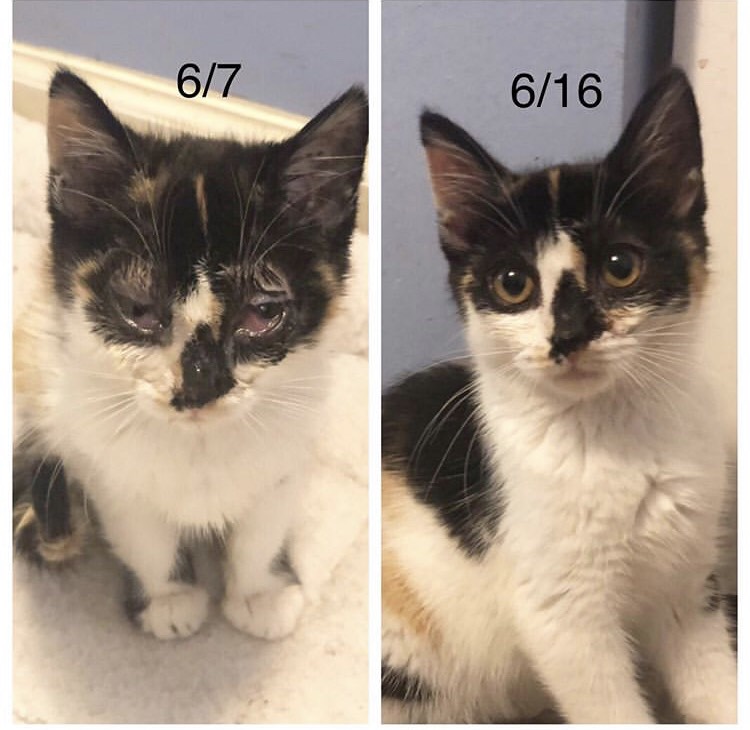
Erin es nuestra increíble gerente de colocación de animales en Forsyth Humane Society. No solo encuentra grandes hogares y rescates para nuestros animales, también es una cría de gatitos. Erin adoptó recientemente a Artemisa de ocho semanas y a su compañero de camada, Apollo, quienes llegaron a FHS con infecciones de las vías respiratorias superiores (resfriado de gatitos). Los gatitos estaban congestionados, letárgicos y sus ojos parecían hinchados. Erin dice “me encanta criar gatitos de 8 semanas o más porque funciona con mi trabajo de tiempo completo. Ellos hacernos compañía mientras estoy en el trabajo, jugando y tomando una siesta juntos “. Ella alimentado y medicado a cada gatito antes y después del trabajo. Recibieron un oral líquido una vez al día y una pomada para los ojos dos veces al día. Erin empezó a ver mejora con los ojos de Artemis en dos días, y sus niveles de energía se animaron hasta. Artemisa se volvió más lúdica, interactiva y comenzó a devorar su comida. También descubrió su cola durante este tiempo, que ella persigue con frecuencia! Erin dice “Me siento afortunada de han jugado un papel en sus viajes a sus futuros hogares. Cuando Artemisa y Apolo sea adoptado, ¡estaré listo para más adoptivos! ” En Forsyth Humane Society, un adoptivo es alguien que se ocupa temporalmente de un animal necesitado. Ellos Brindar amor, atención y cuidado hasta que el animal esté listo para regresar a la Centro de adopción. El cuidado de crianza es típicamente un compromiso de 1 a 2 semanas, a menos que el animal tiene una necesidad especial. Todos los suministros y la atención médica están previsto. Durante la temporada de gatitos, las crías de crianza son cruciales para Forsyth Humane El objetivo de la sociedad de lograr una tasa de ahorro del 90% para 2023. Si usted está interesado en convertirte en un adoptivo, puedes registrarte aquí !
Familias de acogida que salvan vidas
Salvavidas Familias de acogida Diane tiene ha acogido a las mascotas sin hogar durante los últimos tres años y ha acogido a más de 80 animales. Durante su tiempo de acogida para Forsyth Humane Society, ha salvado 43 vidas, incluidos los animales con necesidades especiales. “Adoptar es mostrar un perro o un gato que alguna vez fue abusado o descuidado, una mano amorosa para ayudarlos a abrirse y ver qué maravilloso es ser amado. Es una forma de ayudar preparándolos para su nueva familia para siempre ”, dijo Diane. Diane encuentra la experiencia gratificante. Ella ve la transición de asustada o descuidada a acurrucándose en el sillón reclinable y aprendiendo a interactuar con sus otros animales. Diane dice: “No hay mejor sentimiento que mirar a los ojos de tu hijo adoptivo y ver cuánto te quieren “. Diciendo adiós puede ser el la parte más difícil de la crianza. Diane dice que después de tu primer par de experiencias, es más fácil verlos comenzar su próximo viaje. Ella dice que aunque separarse puede ser difícil, “con la tristeza viene la recompensa y felicidad.” Diane es una orgullosa madre adoptiva de muchos bebés de pieles de refugio. Ella dice “Experimentar una mascota que está aprendiendo a amar y a confiar de nuevo, que una vez estuvo situación descuidada, es algo mágico de ver “. Hacer clic aquí y únete a Diane hoy registrándote para ser una familia de acogida para Forsyth Sociedad humana. Un mensaje para Diane’s fomenta: “Me has convertido en una mejor persona y aprecio el oportunidad de haber sido parte de sus vidas ”! La crianza es gratuita y FHS proporciona todos los suministros y atención médica. Invite a una de nuestras mascotas del refugio a quedarse con usted por solo dos semanas hoy en www.forsythhumane.org/foster .
La asombrosa transformación de Artemisa
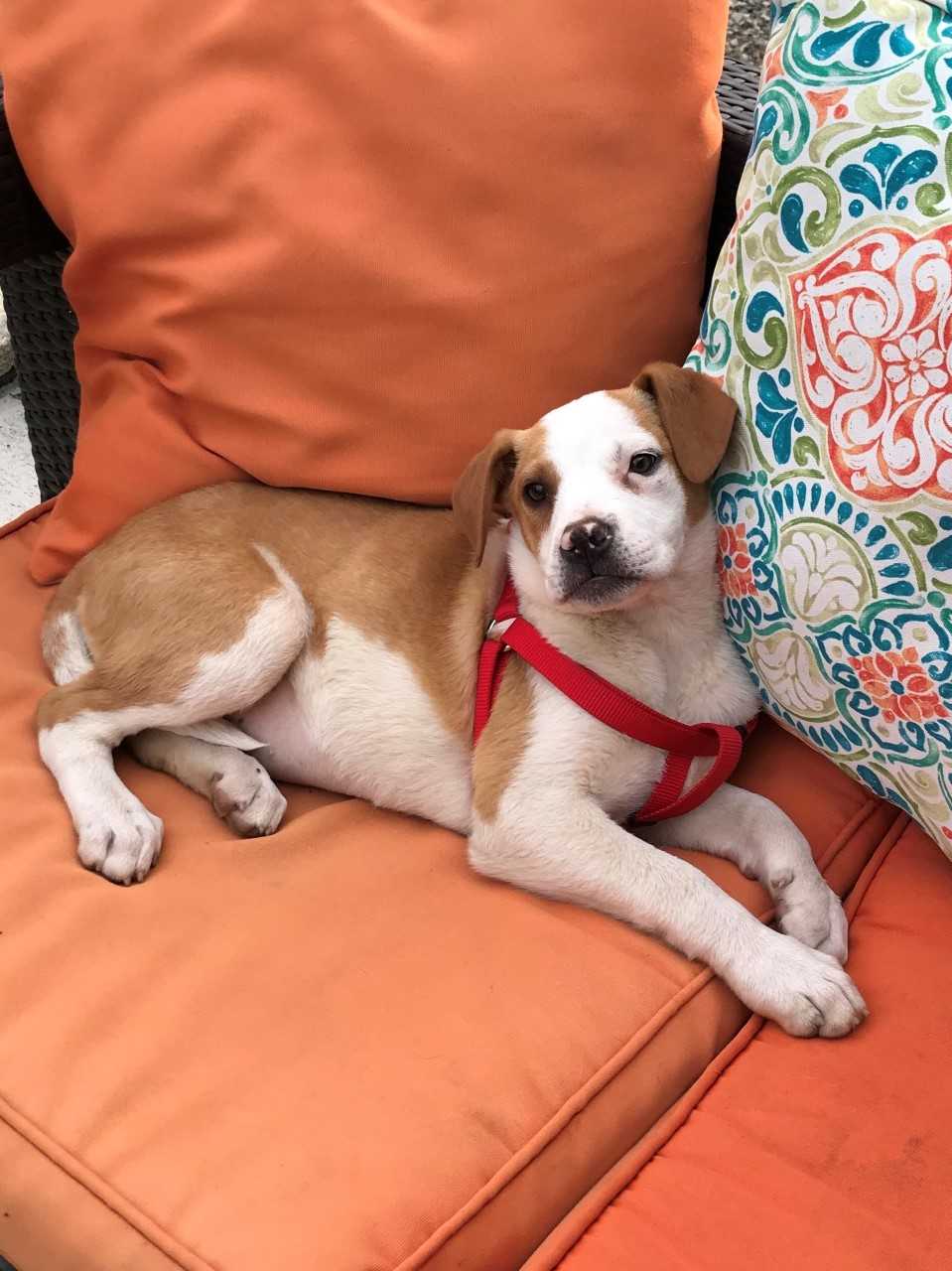
¡Tú puedes ser la razón por la que los perros sin hogar como Artemis encuentran su final feliz! Artemisa fue encontrada con la piel en carne viva e irritada, sola. Servicios para animales del condado de Forsyth la rescató del frío. La transfirieron a nuestro cuidado y le dieron un lugar cálido para dormir y mucha comida para comer. Entró en nuestro programa de acogida que le salvó la vida con un plan de tratamiento prescrito por nuestro veterinario. Después de que la piel de Artemisa sanó, pasó diez días en nuestro centro de adopción siendo amada por nuestros increíbles voluntarios. ¡Entonces Artemis fue adoptado! FHS puede brindar un final feliz a los perros y gatos enfermos y vulnerables gracias a su apoyo. Con nuestro objetivo de aumentar la tasa de ahorro de todos los perros y gatos de los refugios en el condado de Forsyth al 90% para 2023, estamos comprometidos a cambiar el futuro del bienestar animal en nuestra comunidad. En 2018, con su ayuda, cambiamos la tasa de ahorro del 36% al 71%. Tu donación mensual nos ayudará a salvar más perros como Artemis. $ 10 por mes comprarán 10 latas de comida húmeda para cachorros para nuestro programa de crianza. Asóciese con nosotros, dé mensualmente y cambie una vida. #SAVEFURSYTH.