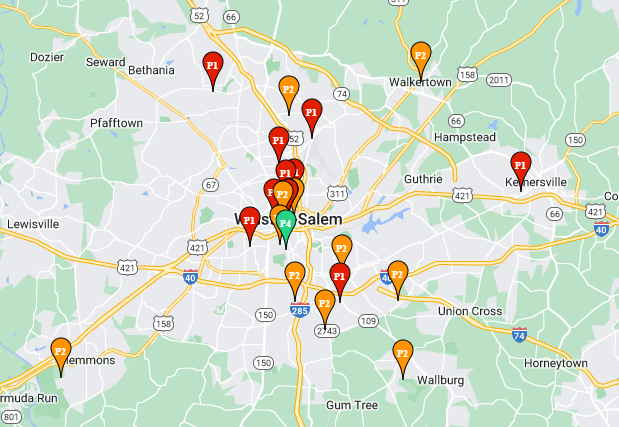
Forsyth Humane Society has an incredible pet food pantry that supports the needs of those in our community who find themselves faced with the harsh question of, ‘will I have to surrender my pet if I cannot afford to feed it?’. Unfortunately, we hear this a lot. Perhaps is someone who has lost their job, who has experienced health issues and can no longer work, the situations are abundant and we don’t really ask questions, instead we show up and we support. Why? Because if we, through the help of pet food donations, can not only feed the pets in our care but also the pets in the community, that is one less pet that comes in our doors. That is one less pet that has to be surrendered due to unforeseen circumstances. That is one more person that can eat without giving their human food to their pet. We found through our partnership with Meals on Wheels that often people would feed their meals to their pets and go hungry themselves before letting their pet starve. We partnered with a local scout troop who comes to our pet food pantry, gets food and packages it for Meals on Wheels. The route runners know who has animals and in addition to providing food daily, they provide pet food when needed. Additionally, we have partners who pickup food from us and distribute all over Forsyth County to organizations as seen on the map below: All our Pet Food Pantry Partners support many elements of care in Forsyth County not just of pets but the people who love them. It’s how we practice the Wellness of Companionship, it’s how we lean into the heart of our organization, Compassion. As much as we love pets, we don’t want anymore coming into our shelter so a piece of our work is on keeping pets and families together and reducing the barriers that may be in place forcing peoples hands to surrender the pets that they love. If you or someone you know is in need of pet food, please connect with some of our partners to organize a time to pickup pet food. Written by Kristen Williams
Lights of Hope

Lights of Hope is a visually stimulating display of the 30,000 pets that have been through our care at Forsyth Humane Society since we opened our building at 4881 Country Club Road here in Winston-Salem, NC in 2017. We hear stories all the time about the great impact pets have on the people that love and care for them and wanted a way to share that with the community in a profound way while also celebrating the peace and joy of the holiday season. We ask the community to celebrate with us by dedicating a light to a pet that has impacted their life, be it in memory or in honor of that special companion. Lights are just $10 and a star with the pets name on it will be displayed in the window among the sea of lights representing the animals coming through our care. We hope to see you on December 1 from 5-7pm as we celebrate the wellness of companionship, we celebrate pets and the people who love them in Forsyth County. There will be warm drinks and food and the lights will officially shine bright starting at 6pm. Join us during this celebratory time of peace, gratitude, love and care! More details can be found at forsythhumane.org/lightsofhope where you can also dedicate a light to that special pet in your life! Written by Kristen Williams
The Wellness of Companionship

As we move into a month of gratitude and thanks, we can’t let the wellness of companionship pass us by here at Forsyth Humane Society. Day after day we strive to create conditions where everyone in our community can benefit from the wellness of companionship – What does that mean? What does that look like? Well, it varies. Let’s explore some of the examples of this celebration. The wellness of companionship is the joy of a pet that has come into the care of Forsyth Humane Society, either off the street or turned in by a good Samaritan, and that pet being reunited with their family members after a short period of time. The wellness of companionship is the furry sidekick that is adopted by a senior who comes into Forsyth Humane Society, looking for a pet to provide a little love and care during the varying stages of life as an older adult and becoming a lifelong companion. The wellness of companionship is the dog that is your loyal running partner. Who’s up with you at 5am when your friends said no, to keep you on the move as a way to support your own mental health. The wellness of companionship is the cat that snuggles in your lap and knocks your glasses off the side table after a long day of work but gives that TLC paired with the laugh that you just needed. The wellness of companionship can be found in the families that foster dogs and cats to keep them out of the shelter until they can get adopted. These foster families can share behavior tendencies and give great insight to prospective adopters to make sure it’s a good fit and help reduce the risk of the animal being returned. The wellness of companionship can be found in our community pet food pantry that provides pet food to underserved communities so that they don’t have to give up their pet just to make ends meet. They can still receive that love from a furry friend regardless of their financial situation. The wellness of companionship can be found in the increased awareness of the decrease in the number of people experiencing mental illness in our country thanks in part to having a pet by their side that can ease the stress and anxiety of everyday life for both person and pet. At Forsyth Humane Society, we work diligently across Forsyth County to build awareness and programs that reduce shelter intake and provide for the compassionate care of pets and the people who love them in our community. This is the wellness of companionship and we are here for it! Thank you for your continued support on this journey whether volunteering, fostering, donating or adopting from us. Because of you we are able to continue sharing the wellness of companionship and you are able to receive it! Written by Kristen Williams
How Adopting Barley Made Our Lives More Awesome!
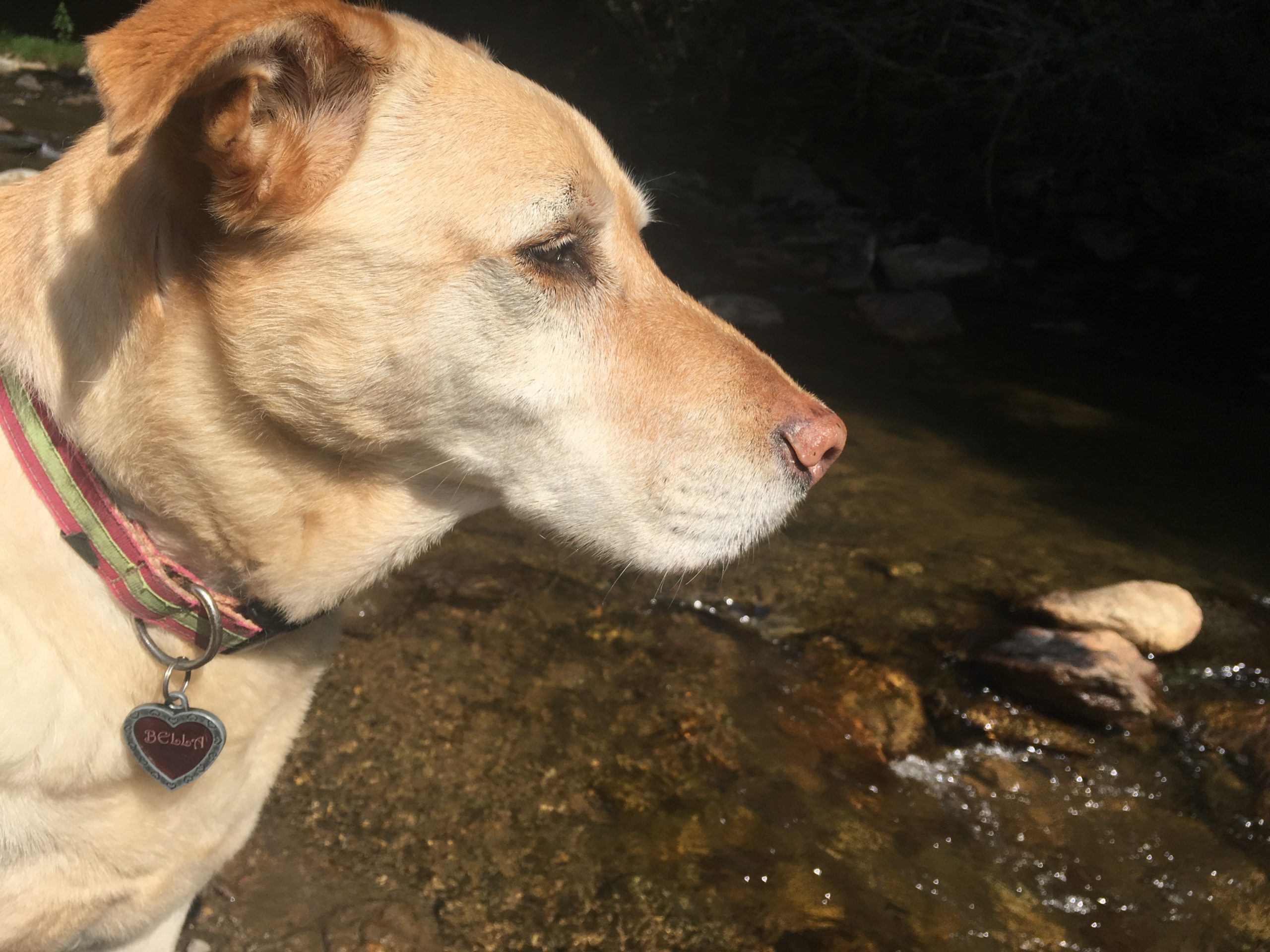
Michelle Schenker is our guest blogger this month. Read about her adoption experience, in her own words, below! We lost our sweet Bella in June, and we felt it more than we have with other pet losses in the past. Our dogs are our kids, and it was so quiet around the house without our food-loving lab cleaning up and following us around everywhere we went. Lily, our 11-year-old, 40-pound mixed breed, was still around and as loving as ever, but she sleeps a lot and does not care to be underfoot as much. So the house felt a little lonelier. After a few months of mourning, we were all ready to consider bringing a new furry family member into our home. My husband Alex and I started looking online at various local animal shelters and cute faces. We knew we wanted one that was around 35-50 pounds, good with other dogs, that was housetrained and ideally around two years old. We narrowed it down to a few that we wanted to meet and headed over to the Forsyth Humane Society’s new adoption center on Country Club Road. We walked around, talked to many dogs in their kennels, and spent some time with a few who we really felt could be strong contenders. However, none seemed quite right. As they say, you just know when it’s the right fit, and we had not made that connection yet. So, we went back home a little discouraged and settled back into life with one dog. But, we never stopped looking at the website to see any newbies that may have arrived. A couple of weeks after our first visit, a dog popped up on the website around 4 pm, and his name was Rudolf. He was 30 pounds and only eight months old. Well, that is a little smaller and a lot younger than we were seeking, but his sweet face spoke to both Alex and me, and his description sounded just right for us. A couple of weeks after our first visit, a dog popped up on the website around 4 pm, and his name was Rudolf. He was 30 pounds and only eight months old. Well, that is a little smaller and a lot younger than we were seeking, but his sweet face spoke to both Alex and me, and his description sounded just right for us. So, we were there waiting the next morning to meet him when the Forsyth Humane Society Adoption Center opened at 11 am. His crate was empty, so we anxiously asked if he had already been adopted. “No, he’s outside playing with a volunteer. We can take you out there if you’d like to meet him,” said another volunteer. “Yes, please!” we exclaimed and excitedly went out to meet him. We saw him playing ball with the volunteer and went inside to meet him. He glanced over, made eye contact, and ran to us. He jumped up, and as soon as I sat down, snuggled up to me, giving tons of kisses. At this point Alex and I looked at each other and we could see in each other’s eyes what the other was feeling. This felt like the one! Alex threw a few balls for him and made a similar connection playing and snuggling. We walked Rudolf back inside to ask a few questions and fill out the adoption forms. Bella and Lily were both adopted from Forsyth County Animal Control, which is now another in partnership with Forsyth Humane Society. So, we thought we were fairly familiar with the adoption process. But, we were surprised to learn that he was already neutered, fully vetted, microchipped and thus, he was ready to take home that day! After we completed the paperwork, we took him home, renamed him Barley, and introduced him to Lily. They were instant pals, playing in the yard from the start! They still love to play as much as that first day and now also love to snuggle up and cozy up (they’ll typically squeeze into the same little bed even if there’s another one right next to it!). We did not plan to adopt a puppy, but as it turns out, this was the best choice for us! Barley has brought so much energy, love, and vigor to all of our lives. He makes us smile and laugh every single day with his silly actions and his complete and total adoration of his Frisbee. He wrestles with his sister until she insists on a break. And his version of a break is to completely bury himself under the covers or within a pile of clothes or laundry – the first time he did that we couldn’t find him! As you may have guessed, our home is no longer the least bit quiet or lonely! We are forever grateful for the warmth and love Barley added to our home. An unexpected benefit to Barley coming home with us was that Lily had gained a few grief pounds after the loss of Bella, and we had not even noticed until we brought that lanky puppy home. She had also started snoring in her older age, causing some concern that she may need to visit the vet to investigate a possible health issue. Lily has always been our playful and super healthy mutt, but she was beginning to show her age. However, Barley’s non-stop play and exercise needs brought Lily back to life. She now plays a few hours a day and quickly lost those extra pounds. And, once the excess weight was gone, she also stopped snoring. What a relief that was! To say that adopting Barley was the best thing that happened to our family in 2019 would be an understatement. He has made us so happy, and our family is more complete because of him. Welcome home Barley, and many thanks to the Forsyth Humane Society for keeping him safe long enough for us to find him! Michelle
FHS Animal Intake Process Part 2: Deworming
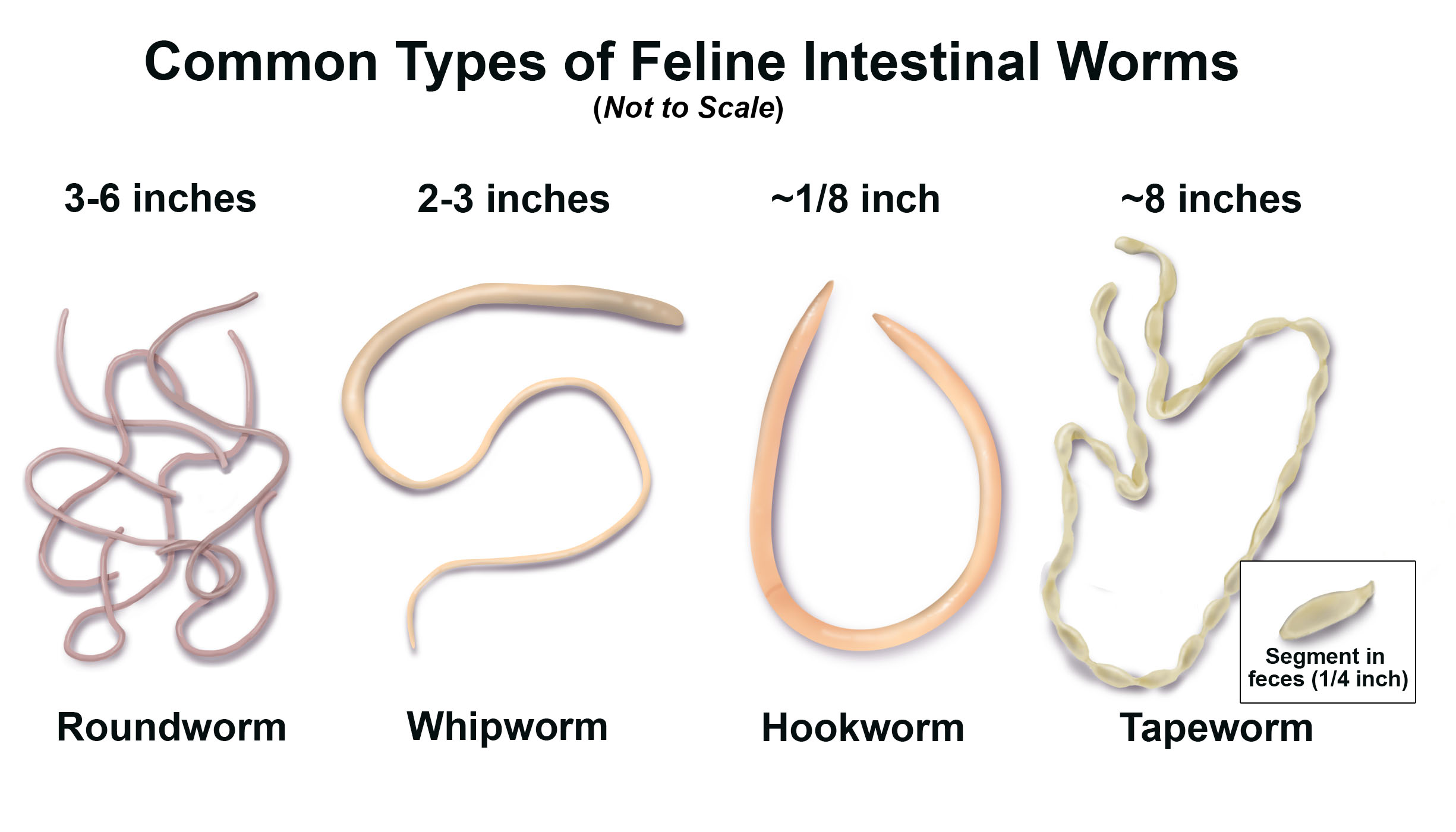
In our last blog post we talked about the first step in the animal intake process at Forsyth Humane Society, which is vaccinating the animals that enter into our care. The next step in the intake process is deworming both cats and dogs. An animal infected with worms can easily pass those parasites to other animals, so deworming is extremely important for shelter pets. In addition, a severe worm infection can cause death. Our cats and dogs are regularly treated for roundworms and hookworms while in our care. If a pet tests positive for, or we suspect a pet may have tapeworms or whipworms, the animal is also treated for these parasites. In general, most animals are exposed to these parasites by the following: Consuming contaminated milk from an infected nursing mother (roundworms) Exposure to contaminated soil Consuming infected prey animals such as rodents and birds Ingesting fleas, ticks and mosquitos Direct contact with an infected animal Consuming or direct exposure to an infected animal’s feces or vomit There are four types of intestinal worms common in cats and dogs. These include: Roundworms: Roundworms are the most common type of intestinal parasites of the worm variety for cats and dogs. These worms live in the intestinal track and deposit eggs in the stool of a host. The worms can reach 3”-5” long by adulthood and look similar to a wet piece of spaghetti. This type of worm is also transmitted to kittens and puppies during nursing. In addition, cats and dogs can contract this parasite by feeding on an infected animal, such as a rodent, chicken, cockroach or earthworm, or by coming into contact with the feces of an infected animal. Roundworm eggs are extremely resilient and can survive harsh conditions, therefore, it’s always best to remove feces from litterboxes and outdoor areas as soon as possible in order to prevent infection or re-infection. Roundworms can also infect humans through contact with infected soil. Our medical team administers 2-3 rounds of Strongid/Pyrantel treatment for each of our shelter animals when they enter our adoption program. Tapeworms: Tapeworms are also very common in cats and dogs. This parasite attaches itself to the host’s small intestine with its sharp, hook- like oral cavity. Tapeworms have long, flat segmented bodies and can grow to 8” in length. Pets that are infected with tapeworms will have dried segments, similar or smaller to a piece of white rice, around their bottoms. Animals become infected with tapeworms when they ingest a host that is carrying tapeworm eggs, usually fleas and birds. Tapeworms sustain themselves by feeding off partially digested food in the host’s intestines, and can leave the infected cat or dog lacking in important vitamins and nutrients. Our medical team administers one treatment of Droncit/Praziquantel when tapeworms are present or when we suspect an infection. Hookworms: Hookworms live in the small intestines of infected animals. Adult worms grow to 1” in length and feed on the blood in the intestines, causing the host to experience anemia. If left untreated, hookworms can cause life threatening anemia in all animals, but kittens and puppies are especially vulnerable. Hookworms are passed through the stool of infected animals. When a cat or dog comes in contact with the infected stool, the animal can contract hookworms. Our medical team administers 2-3 doses of Strongid/Pyrantel treatment for each of our shelter animals when they enter our adoption program. Whipworms: Whipworms are also small, about ¼” long, and live in the cecum and colon of infected dogs and cats. Whipworms can cause severe damage to these organs and are considered one of the most harmful worms to pets. Whipworms are mostly found in dogs, and although cats can also contract whipworms, this worm is not common in felines who live in North America. Whipworm infections occur when an animal eats infected eggs from the environment. In other words, a dog or cat can become infected by inadvertently ingesting soil or grass that has been contaminated with whipworms eggs, or by playing with toys that have been in contact with infected soil. Whipworm eggs are extremely resilient and can survive in the soil for years. Our medical team administers Panacur as needed when whipworms are present or we suspect an infection. This medicine is administered daily for three days. Most animals will not show symptoms of a worm infection until the worm infestation is already well established. Unfortunately, some of the common symptoms of a worm infection are very similar to other diseases. Symptoms can vary, but commonly recognized symptoms of a worm intestinal parasitic infection in dogs and cats include: Weight loss, usually accompanied by a marked increase or decrease in appetite A distended abdomen, otherwise known as a pot-belly Lethargy, vomiting, diarrhea or chronic soft stool Dulling of the animal’s coat or hair loss Scooting, or dragging the bottom area, across the ground Deworming our cats and dogs protects Forsyth County’s existing local animal population when our shelter pets are adopted out into the community. In addition, we are also protecting the human population from hookworms and roundworms, which are zoonotic. When you adopt a dog or cat from Forsyth Humane Society, it’s important to discuss a deworming schedule with your vet. If you don’t have a vet, we can recommend one. In fact, all adoptions include a free head to toe wellness exam at the partner vet of your choice. FHS and our deworming program is supported by donations from our community. Click here if you would like to help us defer the cost of medical care for dogs and cats in our shelter. Thank you for your support and helping us to reach our goal of a 90% save rate for our shelter animals! Dr. Katie Fanning is FHS’s Medical Director. She is passionate about maintaining the health and wellness of the population of animals at FHS and educating the community on issues related to shelter animals. She lives in Winston-Salem with her husband and two rescue dogs, Isaac and Walter.
- « Previous Page
- 1
- …
- 6
- 7
- 8
- 9
- 10
- Next Page »

